
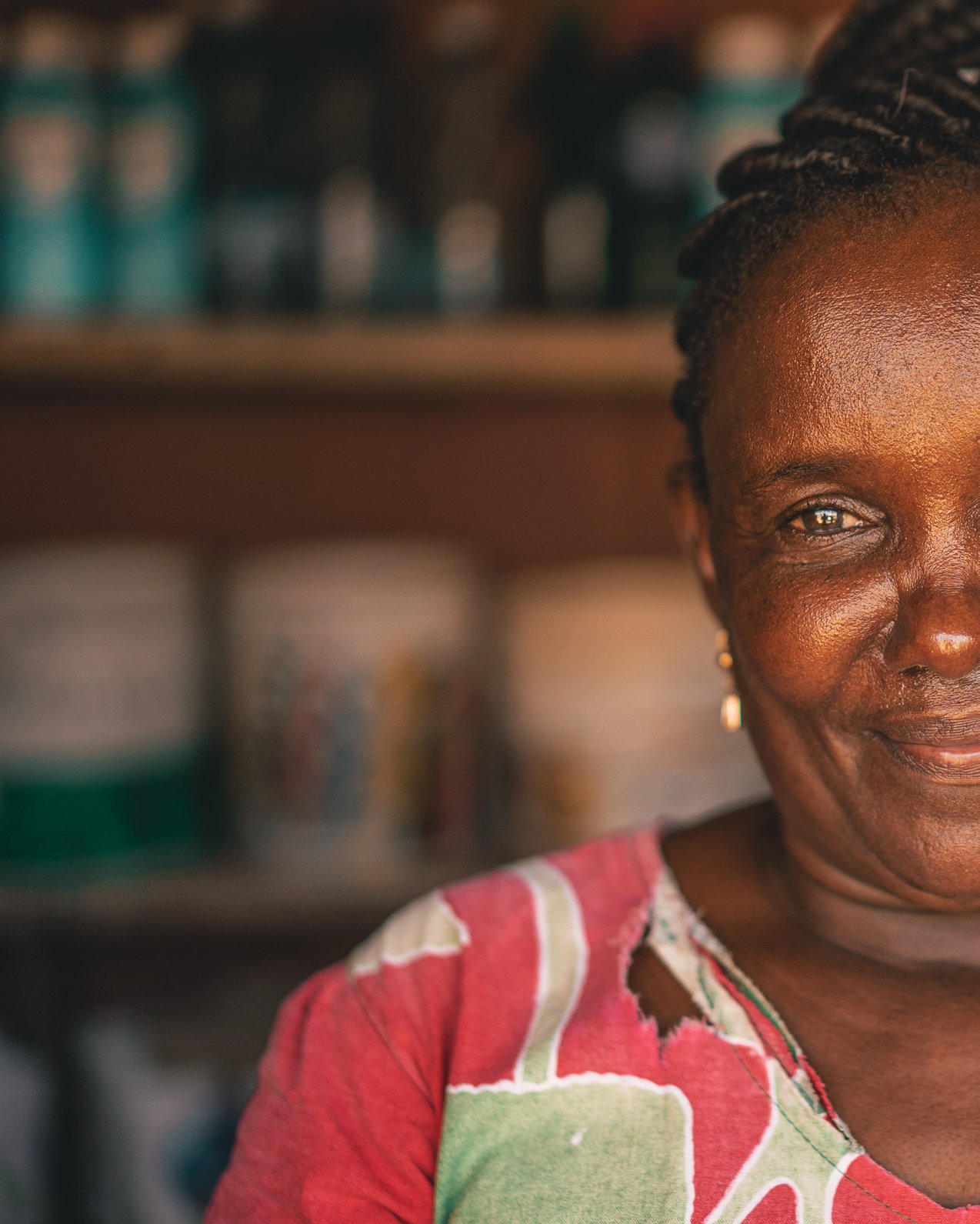
We believe in a world where no story is cut short or silenced by AIDS.
We are working toward a future where every single person living with HIV/AIDS receives life-saving care, gains spiritual hope, and lives a flourishing life without stigma.
Stigma is more deadly than sickness.
In Sub-Saharan Africa, AIDS has historically been a death sentence. Although medication is available globally, the stigma surrounding the disease prevents people from accessing life-saving care. Stigma also cuts people off from once-thriving communities, leaving hundreds of thousands of men and women lonely, vulnerable, and spiritually devastated.


This is the most vulnerable and forgotten population in the world.
Life Beyond AIDS
We exist to embrace and equip people to live a life beyond AIDS. Our model is unique. We search for our clients and find them in their greatest time of need. Once they are enrolled in the program, clients are offered integrated care that addresses their physical, emotional, spiritual, and economic health. We are working toward a future where every single person living with HIV receives life-saving care, gains spiritual hope, and lives a flourishing life without stigma.

Purposeful Programming
Our integrated program operates through the local church and equips clients to thrive physically, emotionally, spiritually, and economically.

Strategic Scaling
By the end of 2027, we will embrace and equip 100,000 men and women throughout Sub-Saharan Africa to live a life beyond AIDS.



Our Impact

3 Countries

11 Regions

105 Centers

41,123 Graduates
By the end of 2027, we will embrace and equip 100,000 men and women living with HIV/AIDS through our nine-month integrated program, transforming their physical, emotional, economic, and spiritual health and positively impacting families and communities. We currently work in 87 communities throughout Kenya, Tanzania, and Uganda, and we are launching operations in South Africa in Q3 of 2022.

The greatest way to overcome stigma is through spiritual hope. We share our Christian faith with all clients who want to learn more.

Impact doesn’t end with the individual. Our graduates represent over 108,000 dependent children who are no longer at risk of being orphaned.

On average, 95% of our clients achieve or maintain viral suppression thanks to our program. That means no more transmission!